Wednesday, May 11, 2016

Blog 4:


Jugendstil and Art Nouveau 


The beginning of the new art movement which was spread throughout Europe had a reformed style which was rooted from the English Art Nouveau and the Japanese prints along with abstract art out of the Viennese work. This Movement is the Jugendstil which means young style in German, Art Nouveau in French, Modern style in English, Liberty in Italian and Modernismo in Spanish. All of these countries where somewhat influenced and made use of the Jugendstil style. The name Jugendstil was derived from a magazine which was published in Munich which means: 'Die Jugend' - Youth. This magazine featured Art Nouveau designs.

Some of the characteristics of Art Nouveau are made through connections between art and life. This means having the ability of making the everyday life interesting by the arts and crafts. Normally organic forms are used and  most of the time are dominating forms which makes it more interesting for the viewer and should inspire the artist's imaginative creations. The beautiful thing about this style, Art Nouveau, is that every work of art is an intense relationship between the viewer and his current life and situations. 

Applying the artists design to the everyday objects found around us and make it available to the client is the most important aspect of Art Nouveau. 

Some architects from Art Nouveau times are the two famous Victor Horta and Hector Guimard. These two architects where derived from the art nouveau movement and made use of this style fro several years, which was shown in their work. 

Victor Horta begain designing in the 19th Century and his very famous Hotel Tassel was the most iconic architectural reference for the Art Nouveau style. In fact this was the first Art Nouveau architecture from the decorative arts. Thus hotel made use of iron material for two parts of the building process. For the construction of the hotel and for the decoration on the inside of the same hotel. The beginning of 'open floored' plan layouts emerged and Horta made use of it in the Hotel Tassel.


Interior of the Hotel Tassel

Hotel Tassel Stairs
Hotel Tassel Door
This Hotel which is situated in Brussels, makes use of Botanical forms, which means it incorporated iron and curvilinear forms. Along with Art Nouveau style, this architectural piece has its origins from Gothic Architecture and Rococo Style. Both style are incorporated in this iconic Hotel and all styles compliment each other. 

Glass, wood and iron are the main materials used in this hotel which seamlessly flows through the whole plan, along with wall decorations and floor mosaics. 


Floor mosaic of  the Hotel Tassel
Hector Guimard was very much influenced by Viollet-le-Duc, John Ruskin and William Morris and the English arts and craft movement. His works where known for the use of modern constructive techniques which made use of innovative materials at that time and made iconic architecture, just like Horta. Materials used where iron, steel, glass and prefabricated elements which where made in factories and then build on site. 

Guimard unique Castel Beranger had an impeccable interior design and decoration. His approaches on architecture where quite familiar to Horta's style but with more energy and 'life' to his ornamentation. This was build in 1895 and completed in 1898 and was a symbol for the Art Nouveau in Paris. The façade of this castle is made out of millstones (metal and stones) and bricks which are all light coloured. The railings are done in metal and crafted with sea horses in wrought which are seen climbing up the building façade. 

Normally metals and bricks where considered as cheap material and since this was a free hand commission which was given to the architect he chose to use cheap material to this building. Having cut stones for shells and prefabricated materials for the balcony railings.


Front door for the Castel Bergander
Catel Bergander Stairs
Interior of the Castel Beranger
Hand Crafted sea horses made of iron climbing up the building 

Reference:

Unjourdeplusaparis.com. (2016). Le Castel Béranger : the first Art Nouveau building in Paris | Un Jour de plus à Paris. [online] Available at: http://www.unjourdeplusaparis.com/en/paris-insolite/le-castel-beranger-art-nouveau-paris [Accessed 11 May 2016].

Visual-arts-cork.com. (2016). Hector Guimard: Biography of French Architect. [online] Available at: http://www.visual-arts-cork.com/architecture/hector-guimard.htm [Accessed 11 May 2016].

Art-nouveau-around-the-world.org. (2016). Hector Guimard (1867-1942). [online] Available at: http://www.art-nouveau-around-the-world.org/en/artistes/guimard.htm [Accessed 11 May 2016].

Visual-arts-cork.com. (2016). Victor Horta: Biography of Belgian Architect. [online] Available at: http://www.visual-arts-cork.com/architecture/victor-horta.htm [Accessed 11 May 2016].

Centre, U. (2013). Major Town Houses of the Architect Victor Horta (Brussels) - UNESCO World Heritage Centre. [online] Whc.unesco.org. Available at: http://whc.unesco.org/en/list/1005 [Accessed 11 May 2016].

Encyclopedia Britannica. (2015). Jugendstil | artistic style. [online] Available at: http://www.britannica.com/art/Jugendstil [Accessed 11 May 2016].


Friday, May 6, 2016

Blog 3:


The Aesthetic Movement 

This was an era in which the previous movement had a lot of skills and innovative ideas that needed to emerge but at the same time the Aesthetic movement, which started in the 1870s, wanted to include the: ‘Art for Art’s sake’ and based their life on this approach.

Japanese WoodBlock
 Art Nouveau and the Modern Movement where the two main styles which influenced the Aesthetic movement to evolve. Firstly because it made use of motifs which were taken from nature and floral designs, secondly was the adoption of the Oriental style which was mainly Japanese forms and taken from woodcuts.

Aubrey Beardsley -
The Peacock skirt
Aubrey Beardsley had gloried the approach of: ‘Art for art sake’ in his work. Influenced by the Japanese woodcuts, he produced several designs which consisted of floral and natural patterns such as peacock designs and the sunflower motif. Although he was not a designer himself, he was a great influence to other designers such as E. W. Godwin and Christopher Dresser who they reformed the design approach to pure lines.

Christopher Dresser was an innovative designer and produced several products which consisted not only furniture design, but also wallpaper designs. Dresser was also influenced by two other designers, an architect Augustus Welby Northmore Pugin and Owen Jones who was an environmentalist. Christopher Dresser made use of different materials such as glass, metal, ceramics and textile objects. He found his true inspirations from plants which he concluded that they were geometrically balanced in proportion and size.

Comparisons between Godwin Armchair 1867 and Christopher Dresser Chair 1883

A very smooth and glossy armchair which was made in the late 1860s made it to the popular scenes at that time when Eduard W. Godwin designed this chair. Made out of upholstered seat and a circular caned seat just underneath the upholstery makes it more comfortable while sitting. Ebony wood was chosen as the prime wood material to build this chair and at the end it was stained in a dark colour. Unlike Godwin’s design, Dresser made a sleekly looking chair without the upholstery. Much cooler as a feeling and initially it was made for a drawing room. The type of wood chosen was quite unusual since normal desk chairs are done in cheap wood like pine or deal but this chair was made of mahogany and painted black.
Godwin Armchairs - 1867
Christopher Dresser Chair - 1863
Godwin made the armchair while the movement was still influenced from purely decorative art and so he wanted to incorporate the sense of comfort and at the same time still have aesthetically good chair design. On the other hand Dresser made his chair made for purpose, mainly to sit on it and work, rather that have a fancy looking chair.

Although these two chairs where not done at the same time, they were still influenced by the same movements and still had some things in common, which are the vertical and horizontal lines crossing each other in a manner that are very similar to each other.


Reference:

Parker, D. (2016). Associated Artists LLC | Southport CT. [online] Associatedartists.net. Available at: http://www.associatedartists.net/furniture/seating/godwin_armchairs_a_pair [Accessed 6 May 2016].

Designophy.com. (2016). Christopher Dresser Chair (Designophy - Designpedia, www.designophy.com). [online] Available at: http://www.designophy.com/designpedia/design-product-1000000316-christopher-dresser-chair.htm [Accessed 6 May 2016].

Collections.glasgowmuseums.com. (2016). Glasgow Museums - Collections Navigator. [online] Available at: http://collections.glasgowmuseums.com/starobject.html?oid=210404 [Accessed 6 May 2016].

The Art Story. (2016). Aubrey Beardsley Biography, Art, and Analysis of Works. [online] Available at: http://www.theartstory.org/artist-beardsley-aubrey.htm [Accessed 6 May 2016].

Skyscrapercity.com. (2016). Detroit's historical gems - Page 2 - SkyscraperCity. [online] Available at: http://www.skyscrapercity.com/showthread.php?t=1520520&page=2 [Accessed 6 May 2016].

The Lantern. (2014). Whistler in 1834 and 2014: Part II. [online] Available at: http://web.colby.edu/museumblog/2014/08/28/whistler-in-1834-and-2014-part-ii/ [Accessed 6 May 2016].

Alessi.com. (2016). Christopher Dresser products for Alessi. [online] Available at: http://www.alessi.com/en/products/designers/christopher-dresser [Accessed 6 May 2016].


Saturday, April 23, 2016

Blog 2:

Mass Production and the Arts and Craft 

Movement

A style which challenged the Victorian Era which was the extreme décor found on all types of products and buildings and wanted to reform the term: Good design with Good Society.  The raise of the consumer class goods had overlapped with the raise of manufactured goods. Manufactured goods where done in a very low quality and design, which resulted into cheap products.

Red House - William Morris 

The Red house of William Morris (Above) and the Victorian Era hospital for sick children (Below) both of which are situated in London are a good example of styles which came right after each other. The red house was build by William Morris himself and Philip Webb in the 1860's. While the Hospital was opened in 1830 till the 1880, which makes a clear indication that the Victorian Era was before the Arts and craft movement but still made an impact on society in architecture. 

Having elongated and pointy rooftops for the hospital, in the Red House there was still a hint of the Victorian Era but much simpler and featured less windows, of course the hospital needed more windows because of more rooms available than the House of Morris. 


Hospital for sick children - Great Ormond Street, London

The revival of the Arts and Craft Movement was this: to have the worker produce beautiful objects and products which was the result of a good craftsmanship, as opposed to mass production. Mass production destroyed all of the craftsman elements and made it look simple to produce such objects or products which had a lot of thought and design behind it. For this movement the only thing they believed in was this: “for the people and by the people, and a source of pleasure to the maker and the user”, in simple terms eliminate the mass production so that there would be that sense of pride in every craftsman that he had produced such objects.

Having said this, a lot of the mass produced products and housing, are done with cheap materials and do not last a life time. In fact they are made to last less so that the consumer has to buy another. Mass production is the result of time is money and no one would really appreciated the process behind the products being made. No good design and no craftsmanship is need to sell a product that is going to be changed in a few months’ time.

Mass production dates back to the beginning on the 1910's. Henry Ford design the very first moving assembly line and revolutionized the manufacturing industry since than. For Henry, his main aim was to produce a lot of Ford cars showing simple designs and for the lowest price possible to introduce affordable vehicle to the general public. In a matter of time, the world was not run on wheels and everyone could afford a car which was mass produced and sold for the public. 
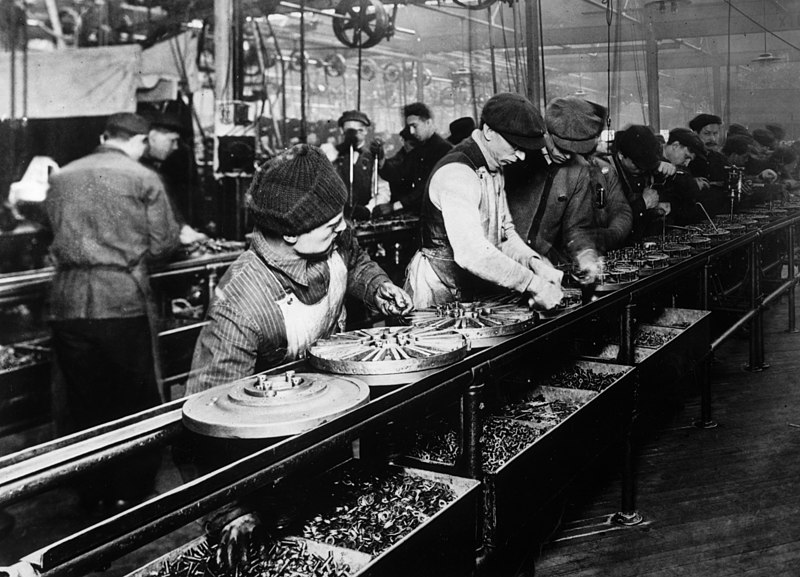
Workers on the first moving assembly line put together magnetos and flywheels for 1913 Ford Autos
Although the invention of the assembly line was an innovative idea, the skill of the craftsmanship was taken away from people who really loved producing products, and so it was slowly fading away. The Arts and Craft movement was the only movement who gave a living hope to these people, to unite skill with design, and produce good products.  

Local Concrete Buildings

As for architecture, the same thing is happening all over. Local architecture, which is rich in history and has a lot to offer, is being destroyed daily to be replaced by some concrete blocks which are of an eyesore to look at. From progress to regress making use of cheap material and lost all of the dedication for the good craftsman.


Many places throughout Europe are being neglected and once discovered they are either being destroyed or turned into a monotonous building which has no value at all. Based on what is seen locally, many think that we are stuck in the past and do not want to move on, but in fact we are not appreciating that at that time things were different and no one could ever build like that again. 


Reference 


Fiell, C. and Fiell, P. (1999). Design of the 20th century. Köln: Taschen.

Ford.co.uk. (2016). The evolution of mass production. [online] Available at: http://www.ford.co.uk/experience-ford/Heritage/EvolutionOfMassProduction [Accessed 23 Apr. 2016].

Victorianweb.org. (2012). Hospital for Sick Children, Great Ormond Street, London WC1. [online] Available at: http://www.victorianweb.org/art/architecture/hospitals/1.html [Accessed 23 Apr. 2016].


Monday, April 18, 2016

Blog 1:

The Industrial Revolution and its effects on Architecture


The industrial revolution began in England in the 1760's and made huge changes which effected the world and the normal life styles. Such changes where in agriculture, manufacturing, transportation and housing. The radical changes in material were very visible and people made use of these new materials in the market. Such materials consisted of cast iron, steel and glass.

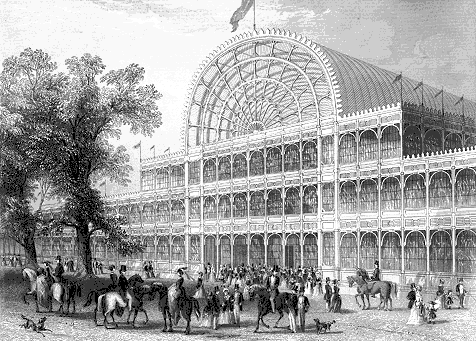
This revolution brought up the beginning of the Crystal Palace Exhibition which was a show case for modern industrial technology and design. Many things were introduced for the first time such as machinery, raw materials and fine arts. The idea of having a 'village like' building set to have all of the modern technologies at time, under one roof was of Prince Albert of England who wanted to exhibit fine artiste and new approach for design. 
Crystal Palace 
Enlightenment was the only thought to the human revolution and this brought up the old styles such as Baroque and Rococo to be radical for those times and needed change for the designers and architects themselves. In return they turned the designers into the paths for the Greek and Roman styles.

St Barbara Spanish Baroque Church in Brooklyn NY
Not excluding the older styles which were still very visible in particular countries around the world and still had an impact on designers since they kept taking from the past and placed them into the present times to make them fashionable again. Architects felt free to select elements from the past cultures and fit them in their designs. Some good examples are seen in visible architecture; having Gothic for Protestant Churches, Baroque for Roman Catholic Churches, the early Greek for Banks, Palladian for institutions, early Renaissance for library and Egyptian for Cemeteries.

Architecture changed in response to the culture change and its environment. In the late 19th century such buildings and multi-story apartments needed a strong lower structure for the whole building to hold firm and steady. Designed to have thick walls on the ground. Since iron and milled steel had come in scene these replaced the wood, brick and concrete along with the stone, all of which were used to build houses and buildings. New materials adopted to the new era and made it easier for users to build and be innovative in their designs.

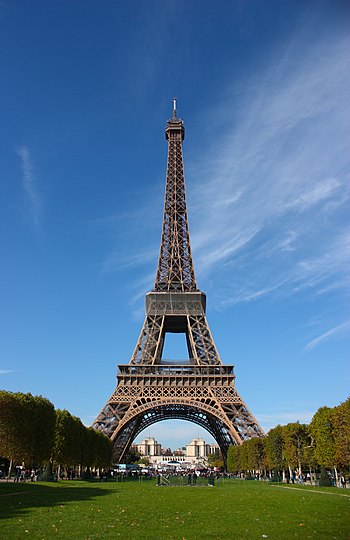
For such new materials introduced to this scene, the magnificent building which was established and made a huge impact at the time was the ‘Eiffel Tower’, which was built in the 1889. This huge structure stands on four large pedestals made out of iron lattice and it reaches a height of 1000 feet. The Eiffel Tower, in my opinion according to the source I found online is the most iconic building/structure in France and for the industry itself. This introduced new age materials and designs and a new way how to construct and build such buildings in different materials. 

Eiffel Tower
Reference: 

Designhistory.org. (2016). The Origins and Impact of the Industrial Revolution. [online] Available at: http://www.designhistory.org/Arts_Crafts_pages/IndustrialRevolution.html [Accessed 23 Apr. 2016].

Slideshare.net. (2016). architecture history - Industrial revolution. [online] Available at: http://www.slideshare.net/omarnene/architecture-history-industrial-revolution?next_slideshow=1 [Accessed 23 Apr. 2016].

Learn.canvas.net. (2016). M9-Architecture and the Industrial Revolution: Art Appreciation. [online] Available at: https://learn.canvas.net/courses/24/pages/m9-architecture-and-the-industrial-revolution [Accessed 23 Apr. 2016].

Lookuparchitecture.com. (2016). Industrial. [online] Available at: http://lookuparchitecture.com/historyindustrial.htm [Accessed 23 Apr. 2016].

the Guardian. (2015). How the Great Exhibition of 1851 still influences science today. [online] Available at: https://www.theguardian.com/science/blog/2015/aug/28/how-the-great-exhibition-of-1851-still-influences-science-today [Accessed 23 Apr. 2016].